Sunday, May 3, 2015

What Works in Fluency Instruction
Three important ideas/things from the lesson today are repeated oral readings have a positive impact with guidance from teachers, parents, or peers have a positive impact on word recognition, fluency, and comprehension, more independent silent reading is not always best, and independent silent reading should not be the only form of reading practice, but the most important thing I learned today is that this article was not very helpful. I think I have learned more from my course text books than from many of the articles I have read recently on this website. I am also learning more from experiencing struggling readers in my classroom and doing what works for them. I don't think there is ever only one strategy that fits every struggling reader so we research and try several until we can find some that truly helps a struggling reader. Even though this article states that there wasn't a correlation to more reading equaling a better reader, I do believe that the more you read, the better you will become and the stronger vocabulary you will have. I think reading more often to become a better reader is better than just throwing in the towel.

http://www.readingrockets.org/article/what-works-fluency-instruction
Sunday, April 26, 2015
Schools in Which All Kinds of Minds Can Grow
I decided to read this article because I thought it was going to give me some insight on different strategies to help me teach students whose brains are wired different. I can tell that some of my students are not all wired the same way and that they excel at different things, but when it comes to some topics, I have difficulty thinking of other ways to teach it so I normally go to a colleague; however, this article was not helpful. I decided to continue reading it to see what some of their ideas of a perfect learning environment looked like.
I thought some important ideas for a learning environment where minds can grow would be 1.) teachers would be well trained on how learning works for different brains, 2.) all students would be held accountable for being productive, and 3.) students would be diagnose according to their strengths, but most importantly, parents and teachers would be partners in education.
Saturday, April 25, 2015
Chapter 9: Examining the Content and Structure of Text
For this chapter, I decided to only focus on one objective due to the subject matter being more difficult. I will focus on D1-e: Do you think the author made this story believable? Why? Or Why Not? I will read the book "Alexander and the Terrible, Horrible, No Good, Very Bad Day" because the students were getting a little tired of hearing about Molly Lou Melon. I also just read about Alexander this past week so they are familiar with it. Most of this activity will be discussion based, but I did like the fantasy/reality cards. I think it will be a helpful activity that I can use with my students even past this upcoming week. It will also be an easy way to check whether or not my students are understanding fantasy vs reality.
Sunday, April 19, 2015
Week 12: Types of Reading Disabilities
I chose this article because I have a few students that struggle with reading, but for different reasons. One student struggles with comprehending what he reads and another struggles with letter recognition, letter-sound recognition, and word recognition so because he cannot read, he struggles with fluency and comprehension in terms of reading. He can comprehend if read to, just not when he reads himself.
Three important things/ideas that I read from this article would be that 1.) 70-80% of struggling readers have difficulties with accurate and fluent word recognition that originates with weaknesses in phonological processing which is also often combined with fluency and comprehension difficulties, 2.) 10-15% of struggling readers have difficulty with speed of word recognition and automatic recall of word spellings, and 3.) 10-15% of struggling readers can decode words, but struggle comprehending what they read, but the most important thing I learned was that most students will have a double deficit, meaning that they will struggle in two areas rather than just one.
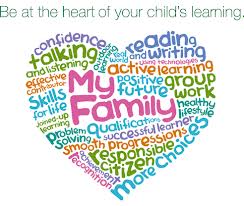
I chose this image below because even though a child may struggle with one of the above areas, it does not mean that they have only weaknesses. My most struggling student has strengths and I use those strengths to help build onto other skills. Even though they may make little progress, it is still progress.

http://www.readingrockets.org/article/types-reading-disability
Monday, April 6, 2015
Week 11 Reading
For this week's reading, I read Seeking Help for a Struggling Reader: Seven Tips for Teachers. I was curious to see if it would give me any information that I didn't already know or that I haven't already tried. Three things that I did learn from this article is that: parents often need suggestions of what to do as well, so I should inform them more often of new ideas that I am trying at school, look for tutoring services if I cannot provide them myself, and attend professional developments in the area of need (which I have been doing and is why I choose to get my Master's in Reading), but most importantly, I learned that I should stay current on what resources are out there for me to use with my struggling readers. I have asked several other teachers of what methods they use and have used suggestions of theirs, but I should try to do some more research on my own.
Subscribe to:
Posts (Atom)